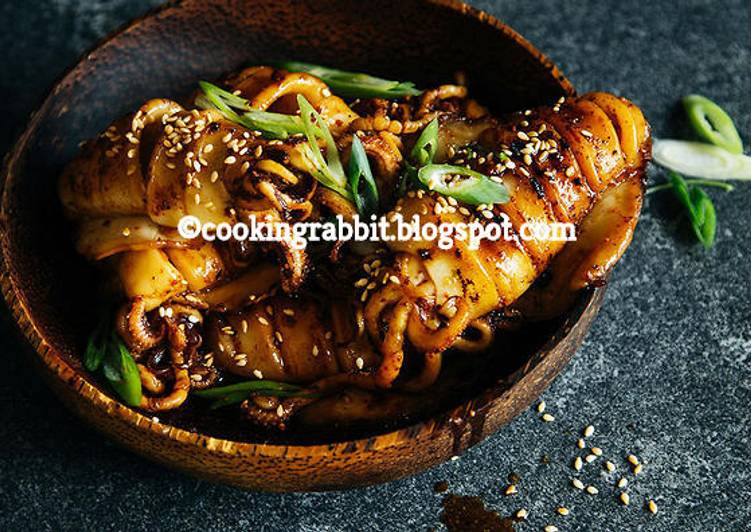
Hello everybody, it’s Jim, welcome to our recipe site. Today, I will show you a way to prepare a distinctive dish, typical japanese special squid. It is one of my favorites. For mine, I’m gonna make it a bit tasty. This will be really delicious.
Typical japanese special squid is one of the most popular of recent trending meals in the world. It is enjoyed by millions daily. It’s easy, it is fast, it tastes delicious. Typical japanese special squid is something which I have loved my whole life. They are fine and they look wonderful.
The Japanese flying squid, Japanese common squid or Pacific flying squid, scientific name Todarodes pacificus, is a squid of the family Ommastrephidae. This animal lives in the northern Pacific Ocean, in the area surrounding Japan, along the entire coast of China up to Russia. The seafood menu with the basic ingredients of squid, combined with the typical Japanese ginger sauce.
Recipe of Typical japanese special squid
To get started with this particular recipe, we have to prepare a few ingredients. You can have typical japanese special squid using 9 ingredients and 6 steps. Here is how you cook it.
Ingredients
The ingredients needed to make Typical japanese special squid:
- Make ready 500 g (1 lb) 2 oz) squid hoods, cleaned and cut into 2 cm (¾ in) rings, leave tentacles intact
- Get 2 tbsp sesame seeds, toasted until golden
- Prepare 2 spring onions (scallions), thinly sliced on the diagonal
- Take japanese marinade
- Make ready 125 ml (4 fl oz/½ cup) light soy sauce
- Prepare 5 cm (2 in) piece of ginger, peeled and finely grated (approximately 2 tbsp)
- Prepare 3 tbsp mirin
- Get 1 tbsp shichimi tōgarashi (see Note)
- Take 1 tbsp peanut oil
They also have features that are distinct to this particular species. You will notice rings around the back of the head. These are used to determine how old they. Japanese flying squid also have three hearts, and the ability to shoot ink at predators.
Instructions
Instructions to make Typical japanese special squid:
- To make the marinade, combine the ingredients in a large bowl. Reserve half the marinade for basting.
- Add the squid to the remaining marinade and mix well to coat. Set aside in the refrigerator to marinate for 15 minutes.
- Preheat a barbecue grill to high and lightly grease with oil.
- Grill the squid, turning frequently and basting with reserved marinade, for 2–3 minutes until opaque and tender. Take care not to overcook the squid as it can quickly become rubbery.
- Serve garnished with toasted sesame seeds and spring onions.
- NOTES - - Shichimi togarashi is a traditional Japanese seven-spice mix, predominately made up of red pepper, and is available from Asian supermarkets.
The Best Japanese Squid Recipes on Yummly The seafood menu with the basic ingredients of squid, combined with the typical Japanese ginger sauce. Will give a warm sensation when eaten. Surume Ika or Japanese Common Squid/Pacific Flying Squid is also called by regional names of Ma Ika, Matsu Ika or Kanzegi. It caught off the shores of Northern Japan and south of Kyushu Island.
As simple as that Guide to Prepare Typical japanese special squid
So that’s going to wrap it up with this exceptional food typical japanese special squid recipe. Thanks so much for your time. I’m sure you will make this at home. There’s gonna be more interesting food in home recipes coming up. Don’t forget to bookmark this page on your browser, and share it to your loved ones, friends and colleague. Thank you for reading. Go on get cooking!
Print this page